Have you been struggling with reading recently? Skipping from book to book without really engaging with or finishing any of them?
Not to worry, it happens to us all from time to time. If you’re in a bit of a reading slump, we suggest you take a look at our blog on how to get out of one! However, if it’s deeper than that, and you’re struggling to gel with the kinds of material that you’re reading, you may well have not found your book genre yet. And this we can definitely help with.
The act of classifying books into genre has been around nearly as long as books themselves and is, for the most part, an extremely useful way of breaking down and thinking about literature.
Genres categorise books into distinctive types based on their themes, content, and style. But genre can also be informed by a number of other factors such as where a work was written, who it was written by, when it was written, and the social, economic, and political contexts of the work.
For us readers, genre is a fantastic opportunity — a gateway, if you will, to easily finding and consuming books we like. Think of book genre as the precursor to Netflix’s ‘Recommended for you’…
{
“@context”: “http://schema.org/”,
“@type”: “BlogPosting”,
“@id”: “https://victoriafreudenheim.com/blog-post/blog-post-how-to-find-your-favourite-genre/#webpage”,
“url”: “https://victoriafreudenheim.com/blog-post/blog-post-how-to-find-your-favourite-genre/”,
“headline”: “How to Find Your Favourite Genre – Victoria Freudenheim”,
“description”: “Not sure what book genre suits you best? This guide walks you through the most popular genres and helps you reflect on your reading tastes — so you can find stories you’ll genuinely enjoy and keep coming back to.”,
“keywords”: [“find your favourite book genre”, “book genres explained”, “what genre should I read”, “types of book genres”],
“genre”:[“Reading discovery”, “Book recommendations”, “Reader guides”, “Literary genres”],
“about”:
[
{
“@type”: “Thing”,
“name”: “Literary genre”,
“sameAs”: [“https://en.wikipedia.org/wiki/Literary_genre”, “https://www.wikidata.org/wiki/Q223393”]
}
],
“mentions”: [
{
“@type”: “Thing”,
“name”: “Literature”,
“sameAs”: [“https://en.wikipedia.org/wiki/Literature”, “https://www.wikidata.org/wiki/Q8242”]
},
{
“@type”: “Thing”,
“name”: “Book”,
“sameAs”: [“https://en.wikipedia.org/wiki/Book”, “https://www.wikidata.org/wiki/Q571”]
},
{
“@type”: “Thing”,
“name”: “Classic Book”,
“sameAs”: [“https://en.wikipedia.org/wiki/Classic_book”, “https://www.wikidata.org/wiki/Q4223073”]
},
{
“@type”: “Thing”,
“name”: “Reading”,
“sameAs”: [“https://en.wikipedia.org/wiki/Reading”, “https://www.wikidata.org/wiki/Q199657”]
},
{
“@type”: “Thing”,
“name”: “Horror Fiction”,
“sameAs”: [“https://en.wikipedia.org/wiki/Horror_fiction”, “https://www.wikidata.org/wiki/Q16575965”]
},
{
“@type”: “Thing”,
“name”: “Poetry”,
“sameAs”: [“https://en.wikipedia.org/wiki/Poetry”, “https://www.wikidata.org/wiki/Q482”]
},
{
“@type”: “Thing”,
“name”: “Biography”,
“sameAs”: [“https://en.wikipedia.org/wiki/Biography”, “https://www.wikidata.org/wiki/Q36279”]
},
{
“@type”: “Thing”,
“name”: “Autobiography”,
“sameAs”: [“https://en.wikipedia.org/wiki/Autobiography”, “https://www.wikidata.org/wiki/Q4184”]
},
{
“@type”: “Thing”,
“name”: “Romance Novel”,
“sameAs”: [“https://en.wikipedia.org/wiki/Romance_novel”, “https://www.wikidata.org/wiki/Q858330”]
},
{
“@type”: “Thing”,
“name”: “Crime Fiction”,
“sameAs”: [“https://en.wikipedia.org/wiki/Crime_fiction”, “https://www.wikidata.org/wiki/Q5937792”]
},
{
“@type”: “Thing”,
“name”: “List of writing genres”,
“sameAs”: [“https://en.wikipedia.org/wiki/List_of_writing_genres”, “https://www.wikidata.org/wiki/Q3178383”]
},
{
“@type”: “Thing”,
“name”: “Comic Novel”,
“sameAs”: [“https://en.wikipedia.org/wiki/Comic_novel”, “https://www.wikidata.org/wiki/Q2561390”]
},
{
“@type”: “Thing”,
“name”: “Essay”,
“sameAs”: [“https://en.wikipedia.org/wiki/Essay”, “https://www.wikidata.org/wiki/Q35760”]
},
{
“@type”: “Thing”,
“name”: “Thriller (genre)”,
“sameAs”: [“https://en.wikipedia.org/wiki/Thriller_(genre)”, “https://www.wikidata.org/wiki/Q182015”]
},
{
“@type”: “Thing”,
“name”: “Science Fiction”,
“sameAs”: [“https://en.wikipedia.org/wiki/Science_fiction”, “https://www.wikidata.org/wiki/Q24925”]
},
{
“@type”: “Thing”,
“name”: “Historical Fiction”,
“sameAs”: [“https://en.wikipedia.org/wiki/Historical_fiction”, “https://www.wikidata.org/wiki/Q1196408”]
}
],
“mainEntity”: [
{
“@type”: “Thing”,
“name”: “Literary genre”,
“sameAs”: [“https://en.wikipedia.org/wiki/Literary_genre”, “https://www.wikidata.org/wiki/Q223393”]
}
],
“mainEntityOfPage”: {
“@id”: “https://victoriafreudenheim.com/blog-post/blog-post-how-to-find-your-favourite-genre/#webpage”
},
“isFamilyFriendly”: “true”,
“inLanguage”: “en-GB”,
“timeRequired”: “PT7M”,
“wordCount” : “1340”,
“datePublished” : “2023-06-26T13:23:36+00:00”,
“image”: [“https://victoriafreudenheim.com/wp-content/uploads/2023/06/book-genres-on-shelf-1.jpeg”],
“audience”: {
“@type”: “PeopleAudience”,
“audienceType”: “Readers exploring different book genres”,
“description”: “Book lovers who are unsure of their favourite genre or want help discovering what types of stories they’re most likely to enjoy.”,
“requiredMinAge”: “12”,
“suggestedMinAge”: “12”,
“suggestedMaxAge”: “90”
},
“articleBody” : “
Have you heard the term \”bookstagram\” being thrown around online? If you haven’t, you’re pretty late to the party as, for the past few years, the concept of a \”booksta\” has been well and truly enthralling readers and online bloggers alike.
The idea of an Instagram page solely dedicated to the consumption and review of books appeals to many, with thousands of users setting up new accounts every day. That being said, the market is already inundated. So, if you’re a newcomer looking to hop on the trend, how can you make sure your account stands out from the others?
In this blog post, we’ll take you through the basics – from username choice and account set-up to content creation and image choice, helping you to stand out amongst the crowd.
Bookstagrams have been breathing new life into the reading scene for years now and are an excellent way to engage with books on a whole new level. The visual strength of Instagram as a platform lends itself really well to a book review format, while the comment and story features allow users and followers alike to get so much more out of their books.
Be it posting long-form reviews of your favourite books, following your most-loved presses and authors, or sharing bookish memes, a bookstagram allows you to carve a little online space just for you and your reading habits. The best part? It’s a complete account away from the regular hustle and bustle of what’s on your regular feed.
Many bookstagrammers (yes, that’s an official term) will often choose a literary-themed username when setting up their account. Oftentimes, this is a variation of [their name] + [reads] or a pun on something bookish. So experiment with different options before you settle on your final handle.
The bio – or biography – is where you can customise your account with a quote or additional information that you wish to share with your audiences. This can be anything from a count of the books you’ve read this year, a note of your current read, or a quote that resonates well with you. Crafting a concise and relevant bio is an essential part of a bookstagram as it will tell your followers all they need to know about the type of reader you are – and can often inform whether people wish to engage with your account or not. Here’s our ‘bio’.
The most popular bookstagram accounts are usually connected by one core element: a defined aesthetic. Usually, book Instagrammers will settle on a certain ‘theme’ or style for their page. This may be by exclusively posting in black and white, using certain filters, or setting up each post in a similar visual style with repeating props or angles.
Visually, for users, a consistent theme on the grid is helpful and engaging. Decide on what theme you’d like to go for early on and stick to it – you’ll thank yourself later!
Usually, social media accounts that post regularly perform better. So, if you; ‘re looking to rack up the likes, you should aim to post at least once every couple of days.
If you’re simply aiming to use your Instagram as a place to keep track of the books you’ve read, it is unlikely that you will be able to post every day (unless you’re a lightning-speed reader). That being said, many users also choose to post book-related content as well as regular reviews. Here’s some inspiration for the kinds of posts you might want to share:
If you’re struggling for ideas, get following any of the countless bookstagrams already in action. Pinching a few book recommendations or post ideas is completely allowed!
Instagram is a highly photo-heavy platform as every post has to have an image as its main part. As such, making sure that your pictures are clear and of high quality is essential.
Making use of fun angles and natural light, playing around with filters, and trying to capture something interesting would be our top tips for taking the photos for your bookstagram.
Lastly, posting online wouldn’t be complete without following and interacting with other, similar accounts. There is a rich, vibrant community of individuals passionate about books online. So, all that’s left to do once you’ve set up your account is to find them!
This can be done easily by using the explore page features to find similar accounts. You can search for certain hashtags such as \”#booklovers\” or \”#readingcommunity\” to find accounts like yours or engage in certain challenges online, Also, commenting on others’ posts and responding to their stories is another way to get your foot in the door of this fantastic community.
That being said, you could always post things yourself that invoke responses such as interactive stories with Q&A features or captions that ask for follower replies or input.
Sold on the idea? Make your account today and start to engage with books on a whole new, virtual level. If you’re stuck on what to post first, how about a book review of one of our top-rated reads? We look forward to seeing your bookstagrams grow! In the meantime, be sure to keep up with the Victoria Freudenheim blog for more literary inspiration and top tips.
“,
“author”: {
“@type”: “Person”,
“name”: “Victoria Freudenheim”
},
“publisher”: {
“@type”: “Organization”,
“additionalType”: [“https://en.wikipedia.org/wiki/Critic”, “http://www.productontology.org/id/Critic”, “https://www.wikidata.org/wiki/Q4263842”],
“name”: “Victoria Freudenheim”,
“legalName” : “Victoria Freudenheim”,
“alternateName” : “Victoria Freudenheim Book Reviews”,
“numberOfEmployees” : “1”,
“url”: “https://victoriafreudenheim.com//”,
“@id”: “https://victoriafreudenheim.com/#organization”,
“sameAs”: [
“https://www.facebook.com/victoriafreudenheimreads”,
“https://x.com/VicFreudenheim”,
“https://uk.linkedin.com/in/victoria-freudenheim-43183a265”,
“https://www.instagram.com/victoriafreudenheimreads/”
],
“brand” : {
“@type”: “Organization”,
“@id”: “https://victoriafreudenheim.com/#organization”,
“name”: “Victoria Freudenheim”
},
“disambiguatingDescription”: “Founded in 2022, but backed by decades of industry experience & a lifelong passion for books – Victoria Freudenheim Book Reviews is the brainchild of famous book critic, Victoria Freudenheim. “,
“logo”:{
“@type”:”ImageObject”,
“@id”:”https://victoriafreudenheim.com/#logo”,
“url”:”https://victoriafreudenheim.com/wp-content/uploads/2023/04/cropped-victoriafreudenheim-logo.png”,
“caption” :”Victoria Freudenheim Logo”,
“width”:”600″,
“height”:”120″
},
“image”: [
“https://victoriafreudenheim.com/wp-content/uploads/2023/04/cropped-victoriafreudenheim-logo.png” ],
“foundingDate”: “2022”,
“foundingLocation”: {
“@type”: “Place”,
“name”: “United Kingdom”
},
“description”: “Victoria Freudenheim book reviews give an insight into what makes a novel a game changer, or where a narrative may have slightly missed the mark. All of this means that you can go on to find your next great read, without having to worry about whether or not your chosen book is going to do the trick. “,
“keywords” : [“book review”, “best books”, “Latest Reviews”, “Victoria Freudenheim”, “book critic”, “literary critic”, “fiction”, “non-fiction”],
“knowsAbout” : [
“https://en.wikipedia.org/wiki/Critic”,
“wikidata.org/wiki/Q4263842”,
“https://en.wikipedia.org/wiki/Literary_criticism”,
“https://en.wikipedia.org/wiki/Book_review”,
“https://en.wikipedia.org/wiki/Non-fiction”,
“https://en.wikipedia.org/wiki/Drama”,
“https://en.wikipedia.org/wiki/Fiction”,
“https://en.wikipedia.org/wiki/Crime_fiction”,
“https://en.wikipedia.org/wiki/Historical_fiction”,
“https://en.wikipedia.org/wiki/Romance_novel”,
“https://en.wikipedia.org/wiki/Literary_fiction”,
“https://en.wikipedia.org/wiki/Thriller_(genre)”,
“https://en.wikipedia.org/wiki/Horror_fiction”,
“https://en.wikipedia.org/wiki/Science_fiction”,
“https://en.wikipedia.org/wiki/Comedy”,
“https://www.wikidata.org/wiki/Q10650082”
]
}
}
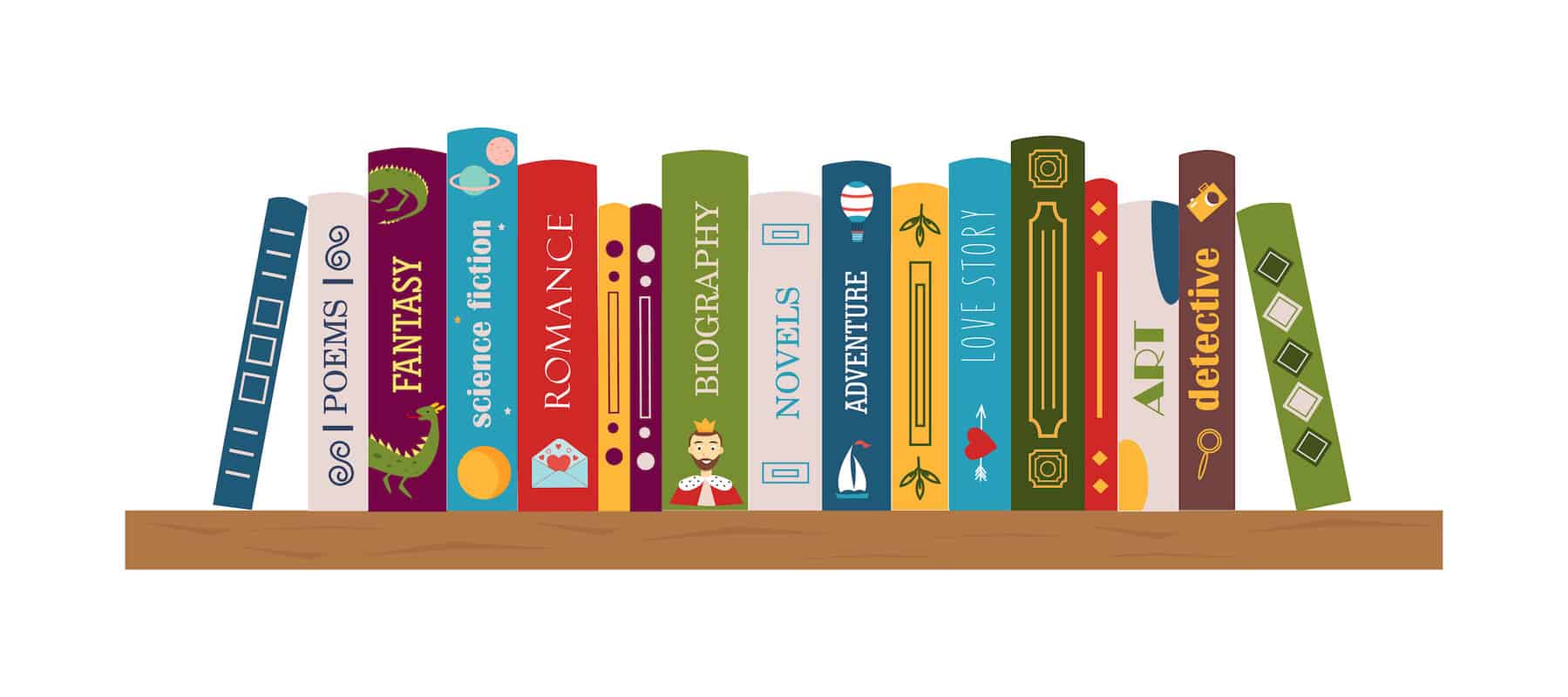
Many people say that once they’ve found ‘their genre’ they feel at home and safe when reading. Here is a list of some of the most common book genres out there today:
And these are just a handful of categories. Genre is a very difficult concept to pin down and can be overarchingly broad and simplistic (like ‘Fiction’ and ‘Non-Fiction’) or extremely granular (like Cookery, Paranormal Romance, or Historical Mystery). At this point, the term ‘microgenre’ begins to crop up a lot — referring to the subsections of genre.
In short, no. Of course you don’t have to. Your reading habits are as unique as the books you read; so, it is natural that you will flit between genres — one day hankering for a gripping thriller, the next opting for a slow-burn enemies-to-lovers romance.
That being said, you may well find yourself gravitating towards a certain genre over time. The more you read, the more you develop your own preferences made up of likes and dislikes. This is called your literary taste. Contrary to what stuffy literary critics would have us believe, anyone can have a literary taste and everyone’s book-related opinions are valid no matter how many or how few books they’ve read.
If you’re curious to know which genre best satisfies your appetite, or are keen to learn more about discovering genres, read on.

This section involves a lot of self-assessment. So, get yourself into a headspace where you are able to think about your reading habits and preferences.
Begin by asking yourself the following questions to start trying to nail down what it is you like and don’t like:
Maybe write down your answers to these questions, noticing any patterns that develop. Use these initial thoughts as a launching off point combined with the activities below designed to help you explore genre more deeply.
This is something we don’t do enough as a society if you ask us! One of the best ways to learn what you like is by voicing your opinions. Whether in a formal setting like a classroom discussion or book club, or just between friends or family, putting your opinions about books into words may well lead you to some interesting conclusions. It might go something like this…
Friend: “Have you read the latest release by Jane Smith?”
You: “No, I’m not really a fan of her work to be honest, I find it a bit boring!”
Friend: “See, that’s exactly why I like it, I don’t enjoy the chase of a murder mystery; I like to have it all spelled out for me.”
Ding ding! It seems you like a book that keeps you on your toes

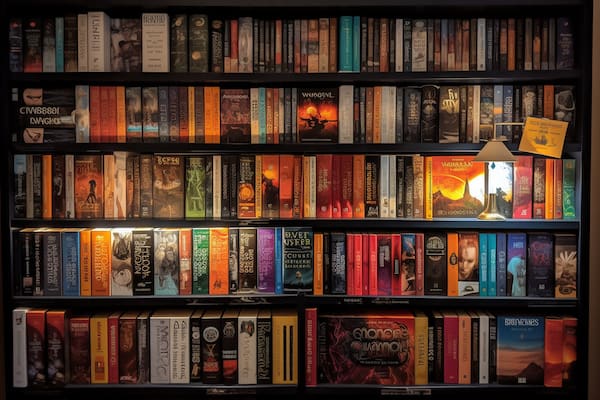
Bookshops are a paradise of genre, neatly organised into different categories for you to explore. When was the last time you visited a bookshop and didn’t just gravitate towards the ‘New Fiction’ tables nearest the door?
We’d encourage you to ‘look up’ a little the next time you’re in a bookshop and consider the different labels on the shelves — from Self Help to Crime.
Walk around, take your time, and dip into the blurbs from a few in each section. If you find yourself putting the books back quickly, it’s probably safe to assume that that’s not the genre for you.
And, don’t be afraid to explore NEW genres — venture to the section you’ve never been to before and try not to get too caught up in the idea that certain genres are “for” anyone. As an example, reading Young Adult fiction does not make you “lazy” or “bad at reading”. Some of the stories are excellent — take feminist Laura Bates’ debut YA novel, The Burning (2019), for example. And, you don’t have to know about history or medicine to read historical novels or textbooks, you just have to enjoy it! Who knows, maybe the graphic novels have been calling you all this time!
Lastly, for a bit of fun, one of the most exciting ways to discover what genre you’re destined to read is by trying online quizzes. Although the answers won’t give you anything as accurate as your own reading efforts, it can be an entertaining way to examine your literary tastes.
Here are a few fun online book genre quizzes for you to try:
Here at Victoria Freudenheim, we want to make it as easy for our readers to experience literature. By actively sorting our reviews into genres — drama, biography, crime, thrillers, and more — we try to help all our readers develop a literary taste of their own.
However, if you just want to throw genre to the wind, check out our top-rated or latest reviews sections for more of a lucky-dip approach to reading. And, for more bookish advice, be sure to keep up to date with our blog.