The Women
Kristin Hannah
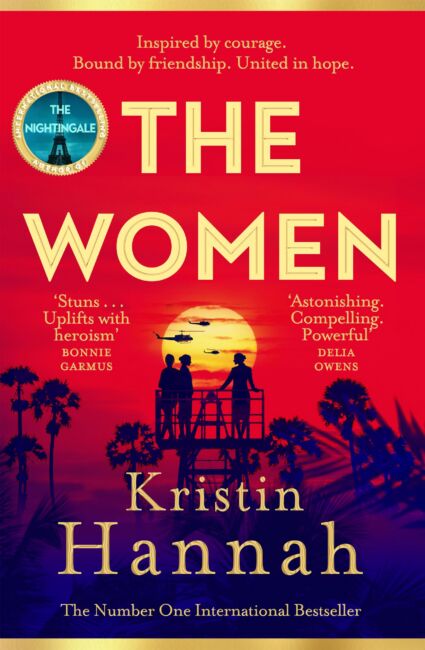
Historical fiction has always had a complicated relationship with war stories. Some novels focus on combat itself, while others turn towards the people left behind once the fighting ends. Kristin Hannah’s The Women, first released in February 2024, takes a different approach by centring the female nurses who served during the Vietnam War and the ways many of them were ignored upon their return home.
It’s a testament to Kristin Hannah’s writing that in 2026, the book remains one of the most widely discussed historical fiction titles on BookTok, where readers continue to recommend it for both its emotional intensity and its focus on a perspective often absent from mainstream stories about the war in Vietnam.
The story follows Frances “Frankie” McGrath, a sheltered 20-year-old nursing student from a wealthy Californian family who impulsively joins the Army Nurse Corps after hearing the phrase, “Women can be heroes, too.” Sent to Vietnam in 1966, Frankie quickly discovers how unprepared she is for the reality of wartime nursing. Alongside fellow nurses, Barb and Ethel, Frankie is forced to mature rapidly while working through exhaustion, fear, and constant loss.
“A novel about deep friendships and bold patriotism, The Women is a richly drawn story with a memorable heroine whose idealism and courage under fire will come to define an era.”
- Laurie Is Reading
The Vietnam sections are intense without becoming overly dramatic. Hannah captures the relentless pace of frontline nursing particularly well, especially the emotional numbness that develops when survival becomes routine. The friendships between Frankie, Barb, and Ethel give these chapters much of their strength and stop the novel from becoming completely consumed by despair.
However, the second half of the story is ultimately more compelling. Frankie’s return home feels every bit as difficult as her experience overseas. Instead of being recognised for her service, she returns to a country deeply divided by the war and unwilling to acknowledge that women served there at all. Again and again, Frankie is told that women were not in Vietnam, a phrase that ultimately becomes one of the novel’s most frustrating realities.
Hannah handles Frankie’s PTSD with patience, allowing her recovery to remain inconsistent and messy rather than neatly resolved. The book spends considerable time showing how trauma lingers long after public attention has moved elsewhere, particularly when the people suffering are dismissed or ignored. Frankie’s downward spiral occasionally becomes difficult to read, but that discomfort is clearly intentional.
At times, The Women, leans heavily into heartbreak. There are stretches in which nearly every major relationship or turning point brings another emotional blow, and some readers may find the intensity exhausting after a while. Certain romantic storylines also feel less convincing than the friendships at the centre of the story, which are often where Hannah’s writing feels most natural.
Even so, the book rarely loses momentum. Hannah writes in a straightforward, accessible style that keeps the story moving despite its heavier themes, which partly explains why the novel has connected so strongly with readers. Frankie’s story remains compelling enough to carry the weaker sections.
“I was sad to finish it because I wanted the experience of reading it for the first time again.”
- Book Club Chat
What gives The Women its lasting impact is not simply its depiction of war, but its focus on recognition and visibility. Hannah repeatedly returns to the idea that many of the people most affected by conflict are often excluded from the public memory surrounding it. Many of the strongest moments in the story come from that frustration rather than on the battlefield itself.
And it’s this perspective that brings a wider understanding beyond Frankie’s individual experience, ultimately making the story even more meaningful. While The Women has been clearly written to provoke an emotional reaction, it also succeeds in drawing attention to a part of the Vietnam War history many readers would have known very little about beforehand.
“The Women is so well-written that the novel is less like reading and more of a visceral experience.”
- The Gilmore Guide to Books
The continued success of The Women has, unsurprisingly, led to a film adaptation currently in early development at Warner Bros. While there has been no news around the cast, or even a release date confirmed, the adaptation feels very natural given how cinematic much of the novel already is, particularly its large dramatic moments and sharp shifts from wartime scenes of chaos and post-war isolation.
For readers who are drawn towards emotionally grounded historical fiction, the book delivers a powerful and often difficult reading experience. While it is not a light story and rarely offers comfort, its focus on the women whose service was pushed aside for decades gives the story much of its force and poignancy.
More than anything, The Women succeeds because it refuses to treat its characters merely as symbols of history. Frankie, Barb, and Ethel feel like people shaped and changed by circumstances far beyond their control, which makes their struggles after the war resonate just as strongly as the sections set in Vietnam itself. By focusing on the experiences of women so often excluded from conversations around the war, Hannah turns The Women into more than a story about Vietnam itself. It becomes a story about who history chooses to remember.
Other works by Kristin Hannah
Readers who connected with The Women, Kristin Hannah’s wider catalogue also explores survival, loss, family, and resilience through emotionally driven historical fiction, including:
- Winter Garden (2010)
- Home Front (2012)
- The Nightingale (2015)
- The Great Alone (2017)
- The Four Winds (2021)
Discover more historical fiction with Victoria Freudenheim
At Victoria Freudenheim, we explore books that leave a lasting impression, from historical fiction, history, to bestselling contemporary novels and literary favourites. Alongside The Women, discover our latest reviews covering many genres from thrillers, romance, fantasy, and other BookTok favourites.
You’ll also find the Victoria Freudenheim blog, which dives into reading culture, alongside our top-rated recommendations, celebrating the stories shaping today’s literary conversations.
| ISBN | 978-1035005703 |
|---|---|
| Pages | 476 |