What Is The Southern Gothic Genre?

Southern Gothic is a genre shaped by tension between past and present, surface and truth, tradition and decay. Its stories are steeped in place and history, using unsettling characters and familiar settings to expose what polite narratives prefer to hide.
For readers encountering the genre for the first time, Southern Gothic is best understood not as a fixed category, but as a literary conversation that evolves over time. From early twentieth-century modernism to contemporary explorations of race, queerness, and environmental disaster, the genre continues to adapt while remaining rooted in the American South.
This guide explores how Southern Gothic works, where it comes from, and which Southern Gothic books offer the clearest entry points into one of American literature’s most enduring traditions.
What Makes Southern Gothic Distinctive
Rather than relying on supernatural horror, Southern Gothic uses realism to create unease. Its tension comes from psychology, social pressure, and moral conflict, often embedded in ordinary environments, small towns, rural communities, and decaying homes.
These familiar settings are crucial. They allow the genre to expose guilt, repression, violence, and inequality as lived experiences rather than abstract ideas. What unsettles the reader is not the presence of ghosts, but the persistence of history – and the weight of unspoken truths.
Most importantly, Southern Gothic refuses nostalgia. It interrogates the past instead of celebrating it, confronting slavery, segregation, religious extremism, and systemic injustice to show how unresolved histories continue to shape the present.
The Origins of Southern Gothic
Southern Gothic emerged in the late nineteenth and early twentieth centuries, shaped by the aftermath of the American Civil War and the collapse of the Old South’s social order. As idealised myths of Southern gentility persisted, writers began dismantling them through fiction that foregrounded poverty, moral hypocrisy, and social breakdown.
Edgar Allan Poe is often cited as a tonal precursor, but the genre fully took shape with modernist writers such as William Faulkner, and later Flannery O’Connor. Their work rejected nostalgia, favouring fractured narratives and deeply flawed characters to reflect a fragmented society.
At its core, Southern Gothic developed as a corrective tradition, one that used discomfort to challenge comforting stories about identity, heritage, and power.
Recurring Themes in Southern Gothic Writing
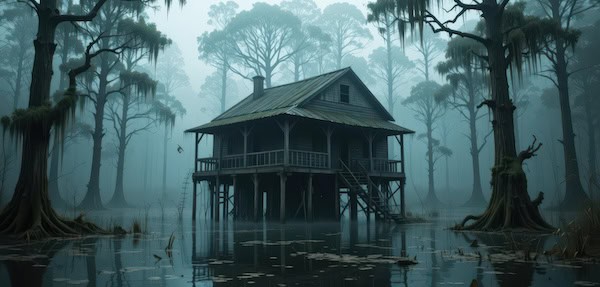
Southern Gothic literature is united less by plot than by a set of recurring thematic concerns:
- Decay and Ruin: Physical deterioration mirrors moral collapse: broken families, dying towns, and crumbling houses reflect social rot.
- The Grotesque: Characters are often exaggerated, damaged, or morally compromised, revealing deeper truths about society.
- Sin, Guilt, and Religion: Evangelical Christianity is often seen as a source of fear, repression, or hypocrisy, rather than salvation.
- Race, Power, and Social Hierarchy: The genre confronts slavery, segregation, and inherited inequality head-on.
- Violence and Psychological Unease: Violence is rarely gratuitous; it exposes buried tensions and historical trauma.
These themes make Southern Gothic especially valuable for students studying literature as cultural critique.
Why Setting Matters So Much
Place is foundational in Southern Gothic. Heat, humidity, isolation, and stagnation shape both atmosphere and character. Small towns trap secrets; rural landscapes offer no escape; cities become spaces of spectacle and moral ambiguity.
The Southern environment often acts as a pressure cooker, intensifying emotional and ethical conflict. In many Southern Gothic books, the land itself seems complicit in the story’s darkness.
Essential Southern Gothic Books to Read

If you’re new to the genre, these Southern Gothic books offer a strong and balanced foundation. Rather than following publication dates, this list is organised to show how Southern Gothic develops in conversation with itself, from early modernist foundations to later expansions in voice, form, and perspective.
How to read this list:
Begin with the early twentieth-century works to understand the genre’s core concerns. Then, move forward to see how later writers reshape Southern Gothic to address race, sexuality, class, and modern disaster.
As I Lay Dying (William Faulkner – 1930)
A foundational text of Southern Gothic modernism.
This novel follows a family transporting their mother’s corpse across Mississippi, exposing moral collapse, obsession, and inherited suffering. Faulkner’s fragmented narration mirrors the psychological and social decay that defines the genre’s earliest form.
Wise Blood (Flannery O’Connor – 1952)
A defining example of Southern Gothic’s religious and grotesque strain.
O’Connor’s darkly comic novel explores fanaticism, hypocrisy, and spiritual emptiness. Through exaggerated characters and moral extremity, it reveals how belief and violence intersect in the Southern imagination.
The Heart is a Lonely Hunter (Carson McCullers – 1940)
A quieter, more interior Southern Gothic novel.
Set in a Georgia mill town, this work examines isolation, disability, race, and unspoken longing. McCullers shows that Southern Gothic can be emotionally restrained, while still deeply unsettling.
Salvage the Bones (Jesmyn Ward – 2011)
A contemporary Southern Gothic shaped by environmental disaster.
Set in Mississippi before Hurricane Katrina, Ward’s novel explores poverty, family bonds, and systemic neglect. It demonstrates how Southern Gothic adapts to modern crises while retaining its core concerns.
A Visitation of Spirits (Randall Kenan – 1989)
A vital expansion of the Southern Gothic canon.
Blending folklore, queerness, and generational trauma, Kenan centres Black Southern experience, and confronts repression within both family and community, challenging who gets represented within the genre.
Midnight in the Garden of Good and Evil (John Berendt – 1994)
Southern Gothic beyond fiction, and beyond the rural South.
This non-fiction work captures Savannah’s eccentric characters, rituals, and moral ambiguities. It shows how Southern Gothic operates as a cultural mode, rather than just a literary one.
Further Reading: If You Want to Go Deeper
Once you’re familiar with the essentials, these titles deepen your understanding of Southern Gothic’s range:
- The Sound and the Fury (William Faulkner)
A formally demanding exploration of memory, decay, and moral collapse.
- Beloved (Toni Morrison)
A devastating reckoning with slavery’s legacy, where trauma takes on a Gothic presence.
- Their Eyes Were Watching God (Zora Neale Hurston)
A lyrical novel revealing how Southern landscape and folklore shape identity and desire.
Why Southern Gothic Still Matters
Southern Gothic endures because it refuses comfort. Its stories expose how history shapes identity, how power lingers long after its structures collapse, and how individuals struggle under burdens they did not choose. Across decades, writers have reshaped the genre to confront new realities, while remaining rooted in place and memory.
Southern Gothic continues to deliver stories that linger – unsettling, emotionally rich, and impossible to forget.
If This Genre Interested You…
If Southern Gothic has sparked your curiosity, explore more book reviews and blog articles on Victoria Freudenheim – from contemporary fiction and history to crime, thrillers, and non-fiction.
Whether you’re studying literature, looking for your next compelling read, or on the hunt for a genre you’ve never tried before, there’s plenty to discover.