This allegorical short story feels as resonant today as it likely did when it was first published in 1953. Indeed, Giono’s contemporaries sung his praises; French novelist André Malraux called him: ‘One of the greatest writers of our generation’.
So what did we think?
The Man Who Planted Trees lives up to its reputation as an essential and transformative read.
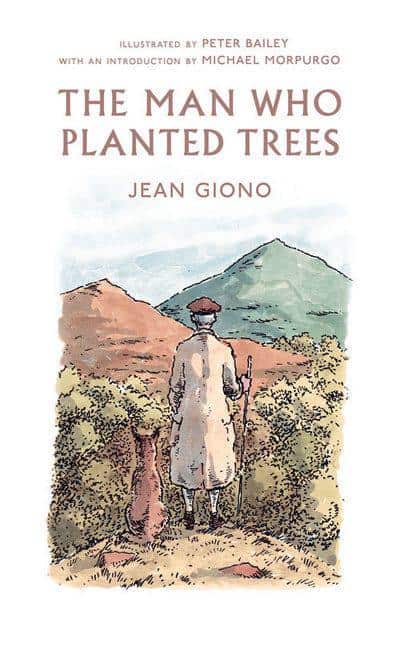
We share this intimate story with an unnamed narrator who comes across a shepherd, Elzeard Bouffier, while hiking through lavender-filled moorland. Apart from the swathes of purple, the land is barren and dry.
Our narrator stays with the shepherd and watches as he plants hundreds of acorns across the wilderness — land that he thought ‘must be common land, or perhaps it belonged to people who weren’t interested in it’ (p.16, The Harvill Press 1996 edition).
{
“@context”: “https://schema.org/”,
“@type”: “WebPage”,
“@id”: “https://victoriafreudenheim.com/reviews/the-man-who-planted-trees-jean-giono/”,
“url”: “https://victoriafreudenheim.com/reviews/the-man-who-planted-trees-jean-giono/”,
“name”: “A Review Of The Man Who Planted Trees by Jean Giono”,
“mainEntity”:
{
“@context”: “https://schema.org/”,
“@type”: “CriticReview”,
“name” : “Book Review – The Man Who Planted Trees”,
“keywords” : [“Classics”, “Fiction”, “France”, “Nature”, “Philosophy”, “Novel”, “Literature”],
“datePublished”: “2023-02-20T19:56:14+00:00”,
“reviewRating”: {
“@type”: “Rating”,
“ratingValue”: “4”,
“bestRating”: “5”,
“worstRating”: “0”
},
“author”: {
“@type”: “Person”,
“name”: “Victoria Freudenheim”
},
“positiveNotes”:
{
“@type”: “ItemList”,
“itemListElement”: [
{
“@type”: “ListItem”,
“position”: 1,
“name”: “an essential and transformative read”
},
{
“@type”: “ListItem”,
“position”: 2,
“name”: “a profoundly beautiful image of a simple man whose work creates abundance for years to come”
}
]
},
“negativeNotes”:
{
“@type”: “ItemList”,
“itemListElement”: [
{
“@type”: “ListItem”,
“position”: 1,
“name”: “There are very few frills”
}
]
},
“reviewBody”: “
This allegorical short story feels as resonant today as it likely did when it was first published in 1953. Indeed, Giono’s contemporaries sung his praises; French novelist André Malraux called him: ‘One of the greatest writers of our generation’.
So what did we think?
The Man Who Planted Trees lives up to its reputation as an essential and transformative read.
We share this intimate story with an unnamed narrator who comes across a shepherd, Elzeard Bouffier, while hiking through lavender-filled moorland. Apart from the swathes of purple, the land is barren and dry.
Our narrator stays with the shepherd and watches as he plants hundreds of acorns across the wilderness – land that he thought ‘must be common land, or perhaps it belonged to people who weren’t interested in it’ (p.16, The Harvill Press 1996 edition).
– Henry Miller
The narrator leaves Bouffier behind but returns years later, after the 1914 war. As though unchanged, Bouffier remains, spryly planting trees and tending to beehives. What has changed though, is the landscape surrounding him.
Giono subtly describes the quiet beauty that has sprung up – a dense forest, a flowing stream, meadows, and ‘some reason for living’ (p.24, The Harvill Press 1996 edition). What follows is a stirring account of the visits back to a landscape so touched by one man’s dedication.
The story is relayed as if from a close friend. There are very few frills here, but what’s conjured is a profoundly beautiful image of a simple man whose work creates abundance for years to come.
– Michael Morpurgo, Independent
In The Man Who Planted Trees, Giono weaves a story so palpable that it’s hard to believe the shepherd was his creation. After turning the last leaf, we were surprised to find quite limited press coverage of this story in recent years.
If there ever was a time that a story like this was essential, it’s now.
“,
“itemReviewed”: {
“@type”: “Book”,
“name”: “The Man Who Planted Trees”,
“url” : “https://victoriafreudenheim.com/reviews/the-man-who-planted-trees-jean-giono/”,
“@id”: “https://victoriafreudenheim.com/reviews/the-man-who-planted-trees-jean-giono/#book”,
“inLanguage”: “en-GB”,
“isFamilyFriendly”: “true”,
“isbn”: “9781860461170”,
“numberOfPages”: “56”,
“bookFormat”: “https://schema.org/Paperback”,
“datePublished”: “1953-01-01”,
“genre”: [“novel”,”fiction”],
“image” : “https://victoriafreudenheim.com/wp-content/uploads/2023/02/the-man-who-planted-trees-jean-giono.jpeg”,
“sameAs” : [
“https://www.goodreads.com/book/show/757438.The_Man_Who_Planted_Trees”,
“https://en.wikipedia.org/wiki/The_Man_Who_Planted_Trees”,
“https://www.amazon.co.uk/Man-Who-Planted-Trees/dp/1860461174”,
“https://www.waterstones.com/book/the-man-who-planted-trees/jean-giono/peter-bailey/9781908786777”
],
“author”: {
“@type”: “Person”,
“name” : “Jean Giono”,
“givenName”: “Jean”,
“familyName”: “Giono”,
“description”: “Jean Giono was a celebrated French author known for his novels, short stories, and essays that often focused on the natural world and the human connection to it. Born in 1895, Giono’s works, including *The Man Who Planted Trees*, reflect his deep love for the French countryside and his philosophical exploration of simple, yet profound, human actions. His storytelling is characterised by vivid imagery and a deep sense of humanity.”,
“birthDate”: “1895-03-30”,
“deathDate”: “1970-10-08”,
“nationality”: “French”,
“sameAs” : [
“https://en.wikipedia.org/wiki/Jean_Giono”,
“https://www.google.com/search?kgmid=/m/04lvjw”,
“https://www.goodreads.com/author/show/54103.Jean_Giono”,
“https://www.amazon.co.uk/stores/Jean-Giono/author/B000AP9WLI”
],
“birthPlace”: {
“@type”: “Place”,
“name”: “Manosque, France”
},
“deathPlace”: {
“@type”: “Place”,
“name”: “Manosque, France”
}
},
“audience”: {
“@type”: “PeopleAudience”,
“audienceType”: “Book Readers”,
“description”: “People who read books”,
“requiredMinAge”: “13”,
“suggestedMinAge”: “16”,
“suggestedMaxAge”: “99”
},
“description”: “The Man Who Planted Trees by Jean Giono is a timeless allegory about a shepherd’s dedication to reforesting a barren valley, celebrating the power of perseverance and nature’s renewal”,
“publisher”: {
“@type”: “Organization”,
“name”: “Harvill Press”
}
}
}
}
- Henry Miller
The narrator leaves Bouffier behind but returns years later, after the 1914 war. As though unchanged, Bouffier remains, spryly planting trees and tending to beehives. What has changed though, is the landscape surrounding him.
Giono subtly describes the quiet beauty that has sprung up — a dense forest, a flowing stream, meadows, and ‘some reason for living’ (p.24, The Harvill Press 1996 edition). What follows is a stirring account of the visits back to a landscape so touched by one man’s dedication.
The story is relayed as if from a close friend. There are very few frills here, but what’s conjured is a profoundly beautiful image of a simple man whose work creates abundance for years to come.
- Michael Morpurgo, Independent
In The Man Who Planted Trees, Giono weaves a story so palpable that it’s hard to believe the shepherd was his creation. After turning the last leaf, we were surprised to find quite limited press coverage of this story in recent years.
If there ever was a time that a story like this was essential, it’s now.
| ISBN | 978-1860461170 |
|---|---|
| Pages | 56 |