Bookish Hobbies To Try If You Love Reading

A love of books does not have to begin with the first page and end when you close the cover.
Reading can naturally lead into collecting, crafting, writing, and meeting people who are just as invested in fictional lives as you are. Some activities help you remember what you have read, while others offer a new way to explore favourite stories or share them.
Whether you prefer quiet creative projects or lively conversations, these are all hobbies for readers which can bring a little more bookish joy into everyday life.
Make your reading more personal
Annotating and keeping a reading journal both create a record of what a book meant to you at a particular moment.
You might want to capture an immediate reaction, save a favourite line, or remember which stories found you at exactly the right time. Ready to try either? Explore our full guide to annotating books or discover how to make and keep a reading journal.
Collect editions that mean something to you
Collecting books can turn a familiar reading habit into a form of treasure hunting. Special editions may include illustrated endpapers, sprayed edges, redesigned covers, or exclusive material from the author. Signed copies, vintage paperbacks, and editions picked up while travelling can become equally meaningful.
A collection does not need to be enormous or expensive. One beautifully designed copy of a favourite novel may matter more than a shelf full of limited editions bought because everyone else wanted them.
Build your collection around a favourite author, publisher, genre. Or cover style. Over time, the shelf will begin to tell its own story about your reading tastes.
Try a bookish craft
If you’re already a dab hand at arts and crafts, then why not allow your creative projects to be inspired by your favourite stories?
You could make bookmarks, paint a literary quote, embroider a small motif, or design a new dust jacket for a well-loved paperback. Collages based on fictional settings can be especially enjoyable when a book has a strong visual atmosphere.
More adventurous crafters might try painting page edges or making miniature scenes for their shelves. Practise on an inexpensive second-hand copy before attempting anything permanent (a rare edition is probably not the ideal place to discover that your masking tape has leaked).
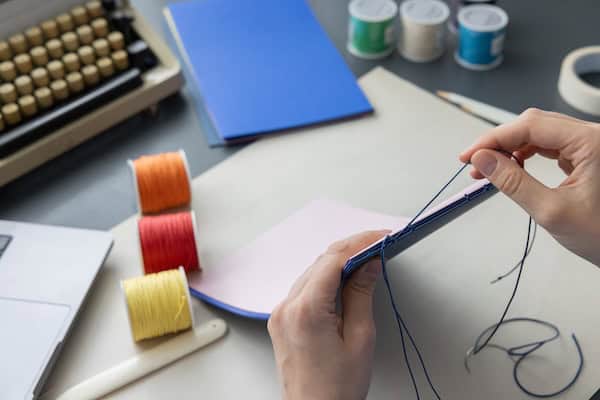
Learn basic bookbinding
Few crafts feel quite as appropriate for a devoted reader as making a book by hand.
Beginner projects usually involve folding paper into sections, stitching the pages together, and attaching a simple cover. The finished book could become a notebook, sketchbook, reading journal, or handmade gift.
The process requires patience, but it can be surprisingly calming. There is also something fitting about learning how books are constructed when so much of your free time is spent reading them.
Create a space dedicated to books
A comfortable reading space can make settling down with a book feel like an occasion rather than something squeezed into the end of the day.
That might mean creating a quiet chair beside a lamp, adding a small table for tea, or giving one corner of a room over to your favourite shelves. Miniature book nooks can bring the same sense of atmosphere to the shelves themselves.
Find more inspiration in our full guide to creating a reading nook.

Make reading a social activity
Reading may be solitary, but sharing books can lead to some of the best conversations.
A book club can introduce you to authors, genres, and interpretations you might never discover alone. Someone may notice a theme you missed, defend a character you found unbearable, or completely change your mind about an ending.
You could also turn a meeting into a book swap by asking everyone to bring a finished read they are ready to pass on. Keep it informal over coffee or choose a genre, season, or shared challenge as a theme.
Turn literary outings into a hobby
Books can provide an excellent excuse to explore somewhere new. Why not visit an author’s home, follow a literary walking trail, or plan a day around independent bookshops? Festivals, readings, and author talks can also become regular events in your calendar.
Even a visit to an unfamiliar library or second-hand bookshop can feel like a small adventure. You may return with an unexpected recommendation, a beautiful old edition, or several books you were definitely not planning to buy.
Share your reading life online
Book blogging, Bookstagram, and BookTok offer creative ways to share recommendations and meet people with similar tastes. A large following is not essential; in fact, a small account can still become an enjoyable record of your reading and lead you towards books you might otherwise have missed.
Find more joy beyond the final page
The best bookish hobby is simply the one you look forward to the most. That might mean stitching a notebook, searching second-hand shelves, or meeting friends to debate fictional decisions over coffee. There is no need for a perfect personal library or a creative project worthy of social media.
Sometimes a hobby only needs to give you another reason to spend time around the stories you love.
If these ideas have inspired you to make more of your reading life, explore Victoria Freudenheim for the latest book reviews, recommendations, and our blog for more reading culture discussions.