How to Make a Reading Nook: A Guide for Book Lovers

If you’re anything like us, you’ll be partial to spending time yearning over aesthetic reading setups on Pinterest!
Picture a soft, cosy, corner, lit warmly with fairy lights, a storm brewing outside while you snuggle up with a cup of tea and a good book. While we can’t control the weather, we do have some say over our reading spaces – and if you’ve got the means and will to, it’s definitely worth cultivating a special place for your number one hobby!
A reading nook isn’t just a trend. It can be a tiny retreat; a comforting space that invites you to slow down, unwind more deeply, and enjoy your books with fewer distractions. If you get it right, a good reading nook blends form with function… and a little bit of magic.
The best part? You don’t need a bay window, a renovation budget, or a library’s worth of hardbacks to make one. So here’s your guide to working with what you have to create a reading nook that suits you.
What is a reading nook?
First of all, let’s go back to basics. A reading nook is a dedicated space specifically for reading. It could be anything from a small corner with a floor cushion and a stack of paperbacks to a hallway alcove turned into a cosy quiet reading zone.
More than anything, it’s a space that signals rest, and a good story.
How to make a reading nook
Step 1: Find the right spot
Look for an area in your home that feels tucked away or calming. This could be:
- A windowsill with natural light
- The awkward space under the stairs
- A corner of your bedroom
- A section of your living room separated by a rug or screen.
On a budget? There’s no need to overthink square footage. A comfy chair in the corner of a room can be transformed with a few well-chosen details.
Step 2: Choose comfy seating
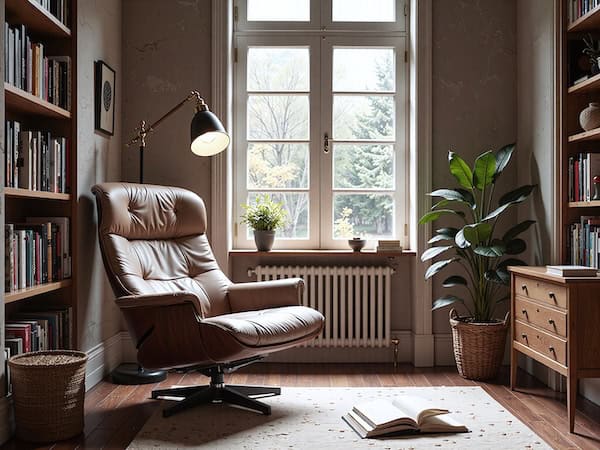
Perhaps most important of all is your seating. It’s the heart of the reading nook, after all, so you’ll need something that supports your body and mind.
You could try:
- An armchair with ergonomic back support
- A beanbag (low budget, high nostalgia and cosiness)
- A daybed or bench seat with cushions
- A floor cushion or pouffe for low-set reading.
You might already have something suitable at home, and if not, you don’t have to buy new. Scout local charity shops, vintage markets, and online marketplaces (Facebook can be a godsend for this!). A secondhand chair can be revived with a new throw or cover.
You could even start by layering up cushions or folding a duvet into a corner to create a makeshift base while you figure out what suits you best.
Step 3: Find good lighting
Lighting is key for long reading sessions (watch out for the dreaded eye strain!), but not only that, it also helps create that cocooned feeling we’re all looking for in a nook. Some good options include:
- A standing lamp or table lamp with warm bulbs (dimmability is a bonus)
- Fairy lights strung around the nook
- A clip-on book light (great on a budget and with minimal space).
Natural light is a bonus! If you’re near a window, make use of it during the day and consider adding some sheer curtains for softness.
Step 4: Add storage
This is where form meets function. If you add a small bookcase, shelf, and crates or baskets under your seat, you can keep your current reads within arm’s reach. Storage is also handy if you annotate books and like to keep pens, highlighters, and notebooks close by.
Reading tip: build your nook around your current and favourite reads; check out our latest reviews to start your next chapter!
Step 5: Personalise it
This is your chance to bring in your style: cosiness and character are key here. Go back to your Pinterest board and think about your interior design tastes… Do you prefer chic, sleek, and minimalist with pastel tones or a maximalist Victorian den? Whatever your style, you can build a nook that feels like an extension of you – no need to follow trends if they’re not your vibe.
A throw blanket is essential, of course, but you might also want to include:
- Cushions with different textures
- Art prints or framed quotes
- A small table for hot drinks
- A plant or two for a sense of zen.
Check out our blog ‘5 Book Accessories to Make Your Life Easier’ for more ideas!
Top reading nook must-haves
Here are some small, affordable additions that can make a big difference and don’t have to break the bank:
- Blankets – any soft one will do; repurpose old scarves/shawls if needed.
- Book basket – a stylish way to store current reads if you can’t add shelves.
- Mug warmer – a relatively low-cost luxury for long reading sessions.
- Noise-cancelling headphones or gentle background playlists – see our reading playlist recommendations here.
- Battery-powered fairy lights – ambient lighting without needing extension leads.
- Drink coasters – a small but important detail.
The most expensive part of your reading nook will probably be your books!

The value of making space to read
There’s something deeply restorative about carving out a small, sacred space just for reading. It doesn’t have to be expensive or Pinterest-perfect… it just needs to feel like yours.
So, whether you’re working with an entire room, a window ledge, or a secondhand armchair in the corner, take the time to build your nook. It will be so worth it!
When you’re ready, it’s time to fill your happy place with stories. If you’re looking for your next read, explore Victoria Freudenheim’s latest reviews, discover top-rated titles, or browse by genre. And, for more lifestyle bookish content like our guide to reading poetry or strategies for reading more books, head to our blog.